
Search results for: 'Power Assist and Power Add-On for Manual Wheelchairs: A Clinical Perspective'
- Related search terms
- Assistive Technology Training Program
- Assistive technology training master
- Assist
- assistive technology profession ceu
- assisting technology training master
-
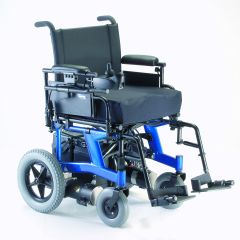 BILL110 - Power Mobility Devices: Understanding the Process$42.00
This course explains how to bill Medicare for power wheelchairs and scooters (POVs), collectively referred to as power mobility devices (PMDs), and what documentation is required.
Learn More -
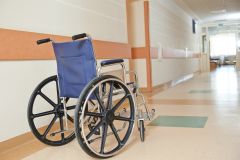 BILL109 - Manual Wheelchairs: Documentation and Billing$42.00
This course explains how to bill Medicare for manual wheelchairs and what documentation is required.
Learn More -
 SELL003 - Handling Complaints$42.00
This course examines the power of a complaint, how it affects your business reputation, and provides strategies for solving the problem.
Learn More -
 COMP004 - Email and Voicemail Etiquette$23.00
This course focuses on the appropriate use of two of the most powerful communication tools at our disposal today: email and voicemail.
Learn More -
 HR005 - Keys to Managing Your Stress$36.00
In this course, you will learn powerful ways to stop stress even before it arrives. You will also learn effective ways of handling the stress that does occur in your life, through healthy, productive outlets.
Learn More -
 HR011 - Strategies for Working on a Healthcare Team$15.95
This course discusses strategies you can use when working on healthcare teams.
Learn More -
 HR023 - Addressing Individual and Systemic Issues$39.00
In this course, learners will need to look not only at the systemic issues of racism in the health care industry, but also their own biases, prejudices, and influence on patients’ care. Becoming knowledgeable and more comfortable with often uncomfortable truths, acknowledging differences, and understanding the issues that both health care workers and patients face are steps in breaking down historical barriers and broadening one’s perspectives.
Learn More -
 CUST005 - First Impressions: You Only Get One Shot$42.00
You never get a second chance to make a first impression, whether it is in person, over the phone or via email. This course provides you the tools for handling those first impression opportunities.
Learn More -
 REHB016 - Implications of Immobility$23.00
This course reviews the effects of immobility on the human body.
Learn More -
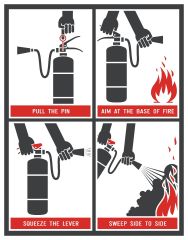 SAFE018 - Developing a Fire Prevention Plan$36.00
A fire prevention plan (FPP) is a written document required by particular OSHA standards. The purpose of an FPP is to outline the steps that a company takes to prevent a fire from occurring in the workplace.
Learn More -
 HR002 - Developing a New Employee Orientation Program$23.00
This course will cover how to effectively develop, deliver and evaluate a successful new employee orientation program. This course also includes a variety of useful checklists, activities and evaluation forms.
Learn More -
 BUS011 - Business Planning - A Financial View$15.95
This course discusses the three steps common to any business planning process.
Learn More -
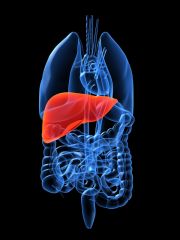 DMGT017 - Overview of Hepatitis C$42.00
This course provides an overview of hepatitis C virus (HCV) infection, symptoms, testing, prevention, available treatments, and outcomes.
Learn More -
 HR004 - Interviewing and Hiring$23.00
This course will assist you in developing a framework to structure an interview in a lawful manner.
Learn More -
 BUS010 - Financial Management Basics for the HME Provider$15.95
This course will provide an introduction to many financial concepts that will assist you in operating your business.
Learn More -
 BILL107 - Oxygen: Documentation and Billing$42.00
This course is designed to assist billers and patient service personnel in understanding Medicare oxygen reimbursement.
Learn More -
 OWC003 - Prevention and Early Intervention of Wounds$23.00
This course focuses on wound healing and local aspects of wound care.
Learn More -
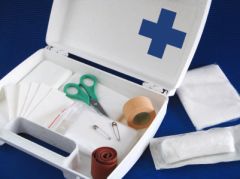 SAFE020 - Basic First Aid$42.00
This course is designed to provide you with awareness of basic first aid principles and the importance of first aid training courses. This information is only a guide. It is not a substitute for training or professional medical assistance.
Learn More -
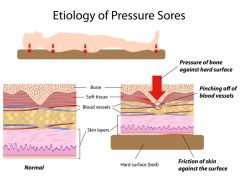 OWC006a - Overview of Pressure Ulcer Etiology - Part 1$23.00
Although ultimately discussion will focus on pressure ulcers, this first part provides foundational knowledge regarding the skin, normal physiology of healing and factors affecting healing and repair. You should complete this series of courses in order: Part 1, followed by Part 2, followed by Part 3.
Learn More -
 REHB019 - Spinal Cord Injury$23.00
This course provides information about spinal cord injuries (SCI) and the role a case manager plays in the acute and rehabilitation of persons with SCI.
Learn More -
 REHB020 - Traumatic Brain Injury$23.00
This course discusses issues, interventions and information pertinent to case managers who work with patients who have sustained a traumatic brain injury (TBI).
Learn More -
 BEHV002 - Understanding Post-Traumatic Stress Disorder$42.00
Post-traumatic stress disorder (PTSD) is a dramatic life-altering condition that causes intense feelings of horror, fear, and hopelessness. The purpose of this course is to assist health care workers in identifying symptoms of PTSD and understanding its impact. Topics will also include treatment options as well as in-the-moment techniques to help patients cope with trauma or PTSD symptoms.
Learn More -
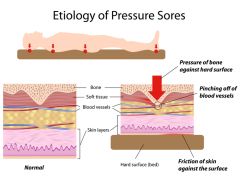 OWC006b - Overview of Pressure Ulcer Etiology - Part 2$23.00
This course will review the National Pressure Ulcer Advisory Panel (NPUAP) staging guidelines of pressure ulcers and the risk factors for developing a pressure ulcer. You should complete Part 1 of this series before starting this course, and you should complete this course before starting Part 3.
Learn More -
 REHB015 - Continuous Cold Therapy for Postoperative Pain$23.00
This course addresses the use of continuous cold therapy (CCT) to manage post-operative pain.
Learn More -
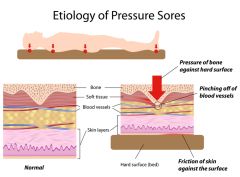 OWC006c - Overview of Pressure Ulcer Etiology - Part 3$23.00
This course will review the basic strategies in the management of pressure ulcers. You should complete Parts 1 and 2 of this series before starting this course.
Learn More