Search results for: 'safe018 occupational health hazards'
- Related search terms
- health care workers and bloodbou
- health care workers and bloodborn
- healthcare commun procedur caring system
- health facility admc
- health facility addit
-
 INF004 - Occupational Health and Industrial Hygiene$42.00
This course addresses the importance of applying industrial hygiene principles, developed by the Occupational Safety and Health Administration (OSHA), to make the workplace a safe environment for all employees.
Learn More -
 SAFE018 - Developing a Fire Prevention Plan$36.00
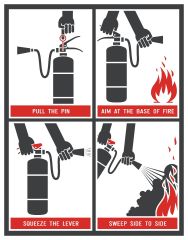
A fire prevention plan (FPP) is a written document required by particular OSHA standards. The purpose of an FPP is to outline major fire hazards and the steps that a company takes to prevent a fire from occurring in the workplace. This course is intended to help safety coordinators develop a fire prevention plan that complies with OSHA standards. (Health care employees should take SAFE030 – Fire Safety instead.)
You should complete “SAFE017 - Developing an Emergency Action Plan” before taking this course, and you should complete this course before taking the “SAFE019 – Managing Fire Extinguisher Systems” course.
Learn More -
 SAFE003 - Hazard Communication$42.00
This online course outlines the OSHA guidelines and requirements for using Safety Data Sheets and the responsibilities for employee safety.
Learn More -
 INF003 - Health Care Workers and Bloodborne Pathogens$42.00
Health care personnel will increase their understanding of the safeguards used to protect themselves and others against the health hazards which can result from exposure to blood and certain body fluids containing bloodborne pathogens.
Learn More -
 SAFE032 - OSHA Workplace Safety Training (0.1 IACET)$42.00
To identify ways to promote environmental safety in the health care setting. Every facility should be safe for their patients/residents and staff. This course will review some of the basic elements of environmental safety for long-term care facilities. Key points on the topics of fire safety, hazard communication, lockout/tagout, internal disaster preparedness, and water management are included. U.S. Occupational Safety and Health Administration (OSHA) is the federal agency responsible for oversight of employee safety. The guidelines in this course are based on OSHA regulations.
Learn More -
 INF006 - TB Training for Health Care Providers$42.00
This course provides information about tuberculosis (TB) that all health care providers should be aware of. You should complete the course “DMGT018 - Overview of Tuberculosis” before completing this course./span>
Learn More -
 SAFE010 - Noise and Hearing Conservation$23.00
This course describes sound hazards and how to measure sound for proper safety levels.
Learn More -
SAFE019 - Managing Fire Extinguisher Systems$42.00
This course covers the use, limitations, and regulatory requirements related to portable fire extinguishers and fixed fire extinguishing systems in the workplace from an employer’s perspective.
This course is designed to be taken in conjunction with:
- SAFE017 – Developing an Emergency Action Plan
- SAFE018 – Developing a Fire Prevention Plan
Together, these courses provide a comprehensive emergency preparedness development program. You should complete SAFE017 and SAFE018 before taking this course.
Learn More -
 SAFE033 - Effective Workplace Violence Prevention Programs (0.1 IACET)$42.00
For many years, health care and social service workers have faced a heightened risk of job‑related violence. Assaults and other violent incidents represent serious safety and health hazards within these industries. OSHA’s workplace violence prevention guidelines provide recommendations and best practices to help employers identify risks, implement preventive measures, and reduce the likelihood and severity of workplace violence incidents. (This course is intended for safety coordinators. Health care workers should complete SAFE015 - Preventing Workplace Violence instead.)
Learn More -
 SAFE019S - Sistemas Extinguidores de Incendios$42.00
Los incendios y las explosiones en el lugar de trabajo matan a cientos y lesionan a miles de trabajadores cada año. Este curso discute el uso de los extintores de incendio portátiles y los sistemas de extinción de incendios fijos en el lugar de trabajo. Este curso se combina con los cursos: “SAFE017 - Desarrollando un plan de acción de emergencia” y “SAFE018 – Desarrollando un plan de prevención de incendios” para ofrecerle un programa de entrenamiento extenso para preparación contra emergencias.
Learn More -
 SAFE006a - Safety in the Workplace - Part 1$42.00
In this first part of the series, we'll address the areas of responsibility for enforcing safety rules within your company; how to identify, analyze and control hazards within your facility; the types of inspections you should be conducting in your workplace; and the type of safety training your company should be offering to your employees.
Learn More -
 BEHV001 - Introduction to Behavioral Health Services$42.00
The purpose of this course is to provide education to home medical equipment (HME) employees who work with individuals with behavioral health disorders. Following this course, you will be able to identify the prevalence of mental health issues in the United States, define and possess knowledge of mental illness and substance-related and addictive disorders, and recognize various approaches to an individual’s care. This course will address the psychosocial needs of individuals with behavioral health issues and conclude which elements contribute to achieving the highest standard of care for such individuals.
Learn More -
 DMGT002 - Health Risks of Being Overweight$36.00
This course examines the health risks of being overweight, such as Type 2 diabetes, heart disease and stroke, cancer, sleep apnea, osteoarthritis, gallbladder disease, and fatty liver disease.
Learn More -
 SAFE008 - Overview of Ergonomics$36.00
Ergonomics is the practice of designing work tasks, equipment, and work environments to fit the capabilities of the worker. This course provides an overview of ergonomic principles and common risk factors that health care and HME/DME providers should be aware of to help reduce physical strain and prevent work related musculoskeletal disorders.
Learn More -
 SAFE009 - Back Safety$42.00
This course focuses on recognizing common back injury risk factors, understanding how work tasks contribute to strain, and identifying safer alternatives to manual lifting. Emphasis is placed on hazard recognition, use of equipment and assistance, proper task planning, and work practices that support back health and reduce injury risk.
Learn More -
 SAFE012b - Ergonomics: Computer Workstations - Part 2$23.00
This course is the second of a 3-part series that illustrates simple, inexpensive principles that will help you create a safe and comfortable computer workstation.
Learn More -
 SAFE012c - Ergonomics: Computer Workstations - Part 3$23.00
This course is the third of a 3-part series that illustrates simple, inexpensive principles that will help you create a safe and comfortable computer workstation.
Learn More -
 SAFE006b - Safety in the Workplace - Part 2$42.00
This is the second of a two-part series of courses that discusses a wide range of issues related to workplace safety. In this second part, we’ll address procedures to report and investigate accidents and other emergencies; basic safety rules and standards your company should consider adopting; how to handle hazard communication, bloodborne pathogens, safe electrical procedures, and process safety management.
Learn More -
 SAFE012a - Ergonomics: Computer Workstations - Part 1$23.00
This course is the first of a 3-part series that illustrates simple, inexpensive principles that will help you create a safe and comfortable computer workstation.
Learn More -
 COMP004 - Email and Voicemail Etiquette$23.00
This course focuses on the appropriate use of two of the most powerful communication tools at our disposal today: email and voicemail.
Learn More -
 SAFE017 - Developing an Emergency Action Plan$36.00
An emergency action plan (EAP) is a written document required by particular OSHA standards. The purpose of an EAP is to facilitate and organize employer and employee actions during workplace emergencies. If you are required to have an EAP, this course will guide you through the development of an EAP. Note: This training is intended for safety coordinators and others who may assist in developing an EAP.
Learn More -
 HR023 - Addressing Individual and Systemic Issues$39.00
In this course, learners will need to look not only at the systemic issues of racism in the health care industry, but also their own biases, prejudices, and influence on patients’ care. Becoming knowledgeable and more comfortable with often uncomfortable truths, acknowledging differences, and understanding the issues that both health care workers and patients face are steps in breaking down historical barriers and broadening one’s perspectives.
Learn More -
 HR016 - Patient Rights and Responsibilities$36.00
People who are consumers of health care have rights, including the right to receive quality care. Along with those rights come certain responsibilities. This course explains what those rights and responsibilities are as defined in 1997 by the Advisory Commission on Consumer Protection and Quality in the Health Care Industry.
Learn More -
 DMGT023 - Overview of Hepatitis B$42.00
This course provides an overview of hepatitis B, how it is spread, its symptoms and diagnoses, and its vaccination.
Learn More -
 AGE003 - Aging and Ethnicity$42.00
This course provides an overview of ethnogeriatrics which is the influence of ethnicity and culture on the health and well-being of older adults.
Learn More