Search results for: 'all cultural'
- Related search terms
- all category 1
- all 15
- all 1.5
- all orthotics fitter
- all orthotist fitter
-
 HR019a – Cultural Competence in Healthcare - Part 1$42.00
In this course, you will learn about basic concepts of cultural diversity including values and worldview. You will also learn how cultural verbal and non-verbal communication differences affect your ability to care for patients.
Learn More -
 HR021 - Cultural Differences in Death & Dying$36.00
The purpose of this course is to understand the cultural importance of the individual and those directly affected, including family and friends, in dealing with illness and death. As the U.S. becomes more ethnically and racially diverse and culturally complex, there is a need for understanding how to work with individuals who have different values, health beliefs, and perspectives about health and wellness than your own or those you are familiar with.
Continuing Education: VGM Education is authorized by IACET to offer 0.1 CEUs for this program.
Learn More -
 HR019b – Cultural Competence in Healthcare - Part 2$42.00
In HR019b, you will learn how racial and cultural differences may affect health care needs and how care is delivered. You will also learn that religious beliefs are also common sources of conflict and misunderstanding in a health care setting. Religious and spiritual beliefs may also affect a person's needs relating to health care, death, and dying.
Learn More -
 All115c - Cultural Competence Addressing Individual and Systemic Issues$15.95
Purpose: This is the final part of a three-part series exploring cultures, ethnicities, age-appropriate care, and historical issues that affect the present health care climate. ALL115a covers cultural competency in health care, ALL115b highlights age-specific considerations in health care, and ALL115c addresses past and current issues of the health care industry, such as racism and discrimination, and how to respond as an individual and facility.
In this course, learners will be encouraged to reflect on systemic issues in health care, as well as consider how personal assumptions can influence care. Becoming knowledgeable and more comfortable with often uncomfortable truths, acknowledging differences, and understanding the issues that both health care workers and patients/residents face are steps in breaking down historical barriers and broadening one’s perspectives.
Learn More -
 HR019c – Cultural Competence in Healthcare - Part 3$42.00
In HR019c, you will learn about age-specific competency as it relates to people from newborn to preschool, school-age children, adolescents, young adults, middle-aged adults, and older adults. You will learn that to provide proper care, the caregiver’s communication, and approach should be appropriate for the person’s age.
Learn More -
 REG114 - Social Media Usage in Health Care (1.0 HR) (All Staff)$15.95
This course is intended for all employees in the long-term care setting. You will learn what is social media, what privacy rights residents have related to social media, and types of possible criminal abuse via social media. You will study what the August 5, 2016 Centers for Medicare and Medicaid Services (CMS) memo mandated that nursing homes do in regards to social media. In June 2016, the American Health Care Association/National Center for Assisted Living (AHCA/NCAL) gave written guidance to members about what these policies may encompass, which will be discussed.
Learn More -
 AGE003 - Aging and Ethnicity$42.00
This course provides an overview of ethnogeriatrics which is the influence of ethnicity and culture on the health and well-being of older adults.
Learn More -
 HR025 - The Importance of Effective Communication in Health Care$36.00
Health care workers in home care will learn the elements of effective communication, as well as techniques to implement within their workplace that will enhance their connections with colleagues and patients. Challenges to communication are addressed in this course as well as ways to best communicate with teammates and patients, and staff in other facilities or hospitals. Topics include considerations for personal preferences and identifiers, such as in persons with disabilities; cultural norms; inter- and intra-facility communication; and effective communication methods.
Learn More -
 ALL115b - Age-Specific Considerations in Health Care$15.95
Purpose: This is the second part of a three-part series exploring cultures, ethnicities, age-appropriate care, and historical issues that affect the present health care climate. ALL115a covers cultural competency in health care, ALL115b highlights age-specific considerations in health care, and ALL115c addresses past and current issues of the health care industry, such as racism and discrimination, and how to respond as an individual and facility.
In this course, health care professionals will increase their understanding and skills in providing optimal care to individuals from varying age groups.
Learn More -
 DMGT033 - Death and Dying$36.00
One of the realities of working in health care is that patient deaths occur. Health care professionals are in a distinct position to provide end-of-life care to patients while also supporting their families during this time. Responsibilities of health care providers may include delivering personal care, offering support, and ensuring comfort for individuals under their care. Dying is a personal journey experienced uniquely by each individual. How people cope during this stage of life is largely influenced by their past experiences with death, as well as their cultural attitudes and beliefs. This course provides learners with the knowledge and skills needed to oversee and support the delivery of high-quality end-of-life care, while guiding teams in meeting the needs of patients, families, and caregivers.
Learn More -
 Additional Policies and Crosswalk for the State of Florida$300.00
AHCA (Agency for Health Care Administration) licenses all DME's in the State of Florida. The AHCA regulations are very prescriptive and require specific actions and processes. Module F was created as a supplement for the VGM Policies and Procedures Manual and contains all of the policies organizations need to meet AHCA regulations.
Learn More
This manual is currently available in English only.
**This is a supplement to the VGM Policies and Procedures Manual. It is only available to those who have purchased the VGM Policies and Procedures Manual.** -
 HR023 - Addressing Individual and Systemic Issues$39.00
In this course, learners will need to look not only at the systemic issues of racism in the health care industry, but also their own biases, prejudices, and influence on patients’ care. Becoming knowledgeable and more comfortable with often uncomfortable truths, acknowledging differences, and understanding the issues that both health care workers and patients face are steps in breaking down historical barriers and broadening one’s perspectives.
Learn More -
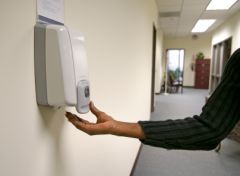 INF004 - Occupational Health and Industrial Hygiene$42.00
This course addresses the importance of applying industrial hygiene principles, developed by the Occupational Safety and Health Administration (OSHA), to make the workplace a safe environment for all employees.
Learn More -
 Leadership Breakfast Series: "Managing Stress in the Workplace"$50.00
For most people, workplace stress is a given. But all stress isn’t created equal and maintaining focus, calm and confidence begin with self-awareness. This workshop will help you think about how stress shows up for you, identify concrete tools to help you maintain your best performance at work and communicate your needs and boundaries professionally.
Learn More -
 HH110-Communication in Home Care (1.0 HR)$15.95All health care employees will better understand the importance and process of communication in the health care setting after taking this course. Learn More
 -
 AGE015 - Aging and Perioperative Care$42.00
Unique challenges can arise when performing perioperative care for older surgical patients. This course reviews the challenges of performing such care that all members of a patient’s health care team should be aware.
Learn More -
 INF006 - TB Training for Health Care Providers$42.00
This course provides information about tuberculosis (TB) that all health care providers should be aware of. You should complete the course “DMGT018 - Overview of Tuberculosis” before completing this course./span>
Learn More -
 BILL113a - Hospital Beds: Documentation and Billing$42.00
This course explains how to bill Medicare for all types of hospital beds and accessories and what documentation is required.
Learn More -
 RESP026 – Pediatric Mask Fitting$39.00
Pediatric PAP mask fittings require sensitivity and compassion toward patients, encouragement of family support, and sometimes, imagination. In this course, sleep technicians, pediatric respiratory therapists, clinicians, and all others fitting pediatric patients will learn about diagnoses common in children requiring PAP masks, as well as the fundamentals for creating a comfortable, successful mask fitting.
Learn More -
 BILL113b - Specialty Mattresses and Support Surfaces$36.00
This course explains how to bill Medicare fee-for-service (FFS) for all types of pressure-reducing support surfaces and provide the documentation necessary to submit a clean claim. Before taking this course, you should complete the courses: BILL100 – Introduction to CMS and Medicare, BILL105 – Frequently Ordered DME, and BILL106 – Advance Beneficiary Notice (ABN).
Learn More -
 BILL115 - Urological Supplies: Documentation and Billing$42.00
This course will help you become familiar with the process of billing Medicare for all types of urological supplies.
Learn More -
 LEAD008 – Mixing and Matching Working Styles$49.00
A common phrase in the workplace is that employees leave their manager, rather than the company. Therefore, a critical area of focus should be placed on how managers and their direct reports interact. If the manager can create an environment of good communication leading to trust, it stands to reason that employees will be more satisfied and stay with their employer longer. Learning basic elements of adapting and connecting with others will provide a solid foundation for interpersonal skills and improve all aspects of the manager/leader/employee dynamic.
There are no CEUs for this course.
Learn More -
 ACC003 - Therapeutic Shoe Competency$42.00
This course allows the student to meet accreditation competency requirements for instructing patients on the proper use of therapeutic shoes (often referred to as “diabetic shoes”). This course does NOT meet therapeutic shoe fitting certification required by some states. You should contact your state licensure board to determine if your state requires therapeutic shoe fitting certification. There are many different therapeutic shoes on the market today. This course reviews the standard items taught with all therapeutic shoes. Before completing this course, you should check your accreditation agency’s specific requirements for competency. No continuing education credit is offered for the completion of this course.
Learn More -
 AGE002 - Communicating with Aging Populations$42.00
While effective communication should be a focus of home medical equipment specialists with all ages of patients, special attention should be paid to working with older adults as an increase in age can bring about medical conditions that may require more patience and an adjustment in how one provides and receives medical information. This course includes tips on how to better facilitate communication with older adult populations.
Learn More -
 HR027 - Drug-Free Workplace Supervisor Training$25.00
Intended Audience: Location managers, billing managers, marketing/sales managers, regional managers, and other designated managers and supervisors. Use of the term supervisors will be used throughout this training as a generic term to include all in the intended audience.
ObjectivesUpon completion of this course, the participant will be able to:
Learn More
1. Identify ways to recognize evidence of employee alcohol and other drug abuse.
2. Identify how to document employee alcohol and other drug abuse problems.
3. Identify how to conduct appropriate investigations related to substance abuse.
4. Identify how to validate and confront employees with substance abuse problems.
5. Identify ways to effectuate the basic requirements for drug testing.