
Search results for: 'base sheets rule'
- Did you mean
- base sheets rtls
- Related search terms
- base sheets
- base sheets complete set electron download
- base sheet filing
- base sheets rtls
- base sheets role
-
 SELL001 - Sales Account Management$23.00
This course will help you sharpen your skills in sales account management. Topics range from information you should record in an account to sales presentation techniques.
Learn More -
 SAFE006b - Safety in the Workplace - Part 2$42.00
This is the second of a two-part series of courses that discusses a wide range of issues related to workplace safety. In this second part, we’ll address procedures to report and investigate accidents and other emergencies; basic safety rules and standards your company should consider adopting; how to handle hazard communication, bloodborne pathogens, safe electrical procedures, and process safety management.
Learn More -
 INF002 - Standard Precautions and Infection Control$42.00
This course provides health care providers with an overview of infection control measures including standard precautions, transmission-based (isolation) precautions, handwashing, personal protective equipment, sterilization, and disinfection.
Learn More -
 SAFE006a - Safety in the Workplace - Part 1$42.00
In this first part of the series, we'll address the areas of responsibility for enforcing safety rules within your company; how to identify, analyze and control hazards within your facility; the types of inspections you should be conducting in your workplace; and the type of safety training your company should be offering to your employees.
Learn More -
 HIP001 - Understanding HIPAA$23.00
This course provides an overview of HIPAA, including the reasons for the law, how it is enforced, how the law has changed over time and how HIPAA relates to the health care industry. You should complete this course before completing part two of this series (“HIP002 - Working with HIPAA”).
Learn More -
 SAFE003 - Hazard Communication$42.00
This online course outlines the OSHA guidelines and requirements for using Safety Data Sheets and the responsibilities for employee safety.
Learn More -
 DMGT008a - Medical Terminology - Part 1$36.00
This course is based on the Short Course in Medical Terminology written by Dr. William J. Dyche, Professor of Anatomy, Des Moines University - Osteopathic Medical Center. Because these modules build on one another, it is highly recommended that you complete this series in order: Part 1, then Part 2, then Part 3.
Learn More -
 DMGT008b - Medical Terminology - Part 2$36.00
This course is based on the Short Course in Medical Terminology written by Dr. William J. Dyche, Professor of Anatomy, Des Moines University - Osteopathic Medical Center. Because these modules build on one another, it is highly recommended that you complete this series in order: Part 1, then Part 2, then Part 3.
Learn More -
 DMGT008c - Medical Terminology - Part 3$36.00
This course is based on the Short Course in Medical Terminology written by Dr. William J. Dyche, Professor of Anatomy, Des Moines University - Osteopathic Medical Center. Because these modules build on one another, it is highly recommended that you complete this series in order: Part 1, then Part 2, then Part 3.
Learn More -
 HR011 - Strategies for Working on a Healthcare Team$15.95
This course discusses strategies you can use when working on healthcare teams.
Learn More -
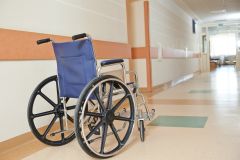 BILL109 - Manual Wheelchairs: Documentation and Billing$42.00
This course explains how to bill Medicare for manual wheelchairs and what documentation is required.
Learn More -
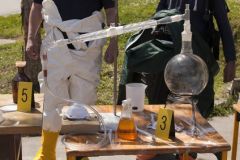 HR017 - Meth and Selling Scheduled Listed Chemical Products$36.00
Methamphetamine addiction has grown to epidemic proportions in the United States. Chemicals used to make meth include ephedrine, pseudoephedrine, and phenylpropanolamine which are found in many cough and cold products and are known as “scheduled listed chemical products” (or SLCPs). Recent federal legislation requires all “regulated sellers” of products containing these three products to self-certify with the Drug Enforcement Administration (DEA) before selling the products. While this course does not satisfy the DEA's self-certifying requirement, it does provide the information the DEA requires in order to self-certify.
Learn More -
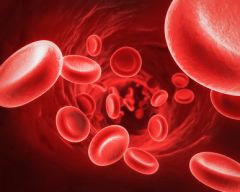 INF003 - Health Care Workers and Bloodborne Pathogens$42.00
Health care personnel will increase their understanding of the safeguards used to protect themselves and others against the health hazards which can result from exposure to blood and certain body fluids containing bloodborne pathogens.
Learn More -
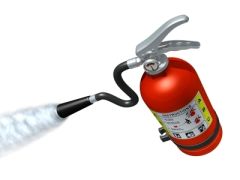 SAFE032 - OSHA Workplace Safety Training (0.1 IACET)$42.00
To identify ways to promote environmental safety in the health care setting. Every facility should be safe for their patients/residents and staff. This course will review some of the basic elements of environmental safety for long-term care facilities. Key points on the topics of fire safety, hazard communication, lockout/tagout, internal disaster preparedness, and water management are included. U.S. Occupational Safety and Health Administration (OSHA) is the federal agency responsible for oversight of employee safety. The guidelines in this course are based on OSHA regulations.
Learn More -
 INF003S - Los Trabajadores del Cuidado de la Salud y los Patógenos Transmitidos$42.00
El personal del cuidado de la salud mejorará su entendimiento sobre las precauciones usadas para protegerse a sí mismos y a otros contra los peligros de la salud resultantes de la exposición a la sangre y ciertos fluidos corporales que contienen patógenos transmitidos por la sangre.
Learn More -
 BILL108 - PAP - Beneficiaries with OSA: Documentation and Billing$42.00
This course introduces positive airway pressure (PAP) devices, and discusses proper billing procedures for reimbursement from Medicare and other third party payers who follow the same criteria.
Learn More -
 DMGT033 - Death and Dying$36.00
One of the realities of working in health care is that patient deaths occur. Health care professionals are in a distinct position to provide end-of-life care to patients while also supporting their families during this time. Responsibilities of health care providers may include delivering personal care, offering support, and ensuring comfort for individuals under their care. Dying is a personal journey experienced uniquely by each individual. How people cope during this stage of life is largely influenced by their past experiences with death, as well as their cultural attitudes and beliefs. This course provides learners with the knowledge and skills needed to oversee and support the delivery of high-quality end-of-life care, while guiding teams in meeting the needs of patients, families, and caregivers.
Learn More