
Search results for: 'CULTURAL DIFFERENCES IN DEATH AND DYING'
- Related search terms
- cultural
- death
- dying
- death and dying
- Cultural. Competency
-
 HR021 - Cultural Differences in Death & Dying$36.00
The purpose of this course is to understand the cultural importance of the individual and those directly affected, including family and friends, in dealing with illness and death. As the U.S. becomes more ethnically and racially diverse and culturally complex, there is a need for understanding how to work with individuals who have different values, health beliefs, and perspectives about health and wellness than your own or those you are familiar with.
Continuing Education: VGM Education is authorized by IACET to offer 0.1 CEUs for this program.
Learn More -
 DMGT033 - Death and Dying$36.00
This course provides you with information you can use when dealing with dying patients and their caregivers and family members.
Learn More -
 HR019b – Cultural Competence in Healthcare - Part 2$42.00
In HR019b, you will learn how racial and cultural differences may affect health care needs and how care is delivered. You will also learn that religious beliefs are also common sources of conflict and misunderstanding in a health care setting. Religious and spiritual beliefs may also affect a person's needs relating to health care, death, and dying.
Learn More -
 HR019a – Cultural Competence in Healthcare - Part 1$42.00
In this course, you will learn about basic concepts of cultural diversity including values and worldview. You will also learn how cultural verbal and non-verbal communication differences affect your ability to care for patients.
Learn More -
 HR019c – Cultural Competence in Healthcare - Part 3$42.00
In HR019c, you will learn about age-specific competency as it relates to people from newborn to preschool, school-age children, adolescents, young adults, middle-aged adults, and older adults. You will learn that to provide proper care, the caregiver’s communication, and approach should be appropriate for the person’s age.
Learn More -
 AGE003 - Aging and Ethnicity$42.00
This course provides an overview of ethnogeriatrics which is the influence of ethnicity and culture on the health and well-being of older adults.
Learn More -
 HR023 - Addressing Individual and Systemic Issues$39.00
In this course, learners will need to look not only at the systemic issues of racism in the health care industry, but also their own biases, prejudices, and influence on patients’ care. Becoming knowledgeable and more comfortable with often uncomfortable truths, acknowledging differences, and understanding the issues that both health care workers and patients face are steps in breaking down historical barriers and broadening one’s perspectives.
Learn More -
 HR025 - The Importance of Effective Communication in Health Care$36.00
Health care workers in home care will learn the elements of effective communication, as well as techniques to implement within their workplace that will enhance their connections with colleagues and patients. Challenges to communication are addressed in this course as well as ways to best communicate with teammates and patients, and staff in other facilities or hospitals. Topics include considerations for personal preferences and identifiers, such as in persons with disabilities; cultural norms; inter- and intra-facility communication; and effective communication methods.
Learn More -
 HR006 - Diversity and Inclusion in the Workplace$42.00
Description
Diversity and inclusion are two important components of improving equality and advancement in the workplace. One cannot fully prosper without the other. This course is designed to provide both health care workers and employers a deeper understanding on the topic, a review of applicable federal laws, and guidance on how to implement the concepts of diversity and inclusion in the workplace.
Learn More -
 OWC003 - Prevention and Early Intervention of Wounds$23.00
This course focuses on wound healing and local aspects of wound care.
Learn More -
 DMGT041 - Coronavirus (COVID-19)$15.95
Coronavirus (COVID-19) is a novel virus that causes respiratory disease in persons infected, which can range from mild symptoms such as a common cold to more severe diseases – even death. This course provides health care workers with both individual and workplace practices to help prevent the spread of transmission and ultimately keep patients, team members and the public safe.
Learn More -
 SAFE024 Bariatric Hospital Bed Safety and Selection$42.00
This course will discuss current electric hospital bed standards and current regulatory processes in the United States. The course also provides a guide for selecting bariatric hospital beds and implications for future research.
Learn More -
 BILL104 - Claims Filing and Processing Claims$42.00
This course will guide you through the information required prior to submitting a claim and the correct ways to submit a claim. You will also learn the different types of claims.
Learn More -
 AGE011 - Diabetes and Depression in the Elderly$42.00
This course examines the relationship between diabetes and depression among the elderly population.
Learn More -
 SAFE006a - Safety in the Workplace - Part 1$42.00
In this first part of the series, we'll address the areas of responsibility for enforcing safety rules within your company; how to identify, analyze and control hazards within your facility; the types of inspections you should be conducting in your workplace; and the type of safety training your company should be offering to your employees.
Learn More -
 INF009 Equipment Sterilization and Phlebotomy Issues$15.95
This course contains two articles: one that addresses equipment sterilization procedures and the other that discusses trends and issues in phlebotomy practice.
Learn More -
 HR016 - Patient Rights and Responsibilities$36.00
People who are consumers of health care have rights, including the right to receive quality care. Along with those rights come certain responsibilities. This course explains what those rights and responsibilities are as defined in 1997 by the Advisory Commission on Consumer Protection and Quality in the Health Care Industry.
Learn More -
 AGE006 - Aging and Depression$42.00
This course provides an overview of the causes and risk factors, signs and symptoms, and diagnosis and treatment of depression in the elderly population.
Learn More -
 AGE007 - Aging and Diabetes$42.00
Managing diabetes in the elderly presents many challenges. This course provides an overview of those challenges and how they can be met.
Learn More -
 AGE017 - Aging and Multiple Sclerosis$42.00
This course reviews the relationship between aging and multiple sclerosis.
Learn More -
 BILL113b - Specialty Mattresses and Support Surfaces$36.00
This course explains how to bill Medicare fee-for-service (FFS) for all types of pressure-reducing support surfaces and provide the documentation necessary to submit a clean claim. Before taking this course, you should complete the courses: BILL100 – Introduction to CMS and Medicare, BILL105 – Frequently Ordered DME, and BILL106 – Advance Beneficiary Notice (ABN).
Learn More -
 AGE004 - Aging and Memory$42.00
This course provides an overview of how aging affects memory.
Learn More -
 INF012 - Cleaning and Disinfecting HME Equipment$15.95
This course provides a guide for cleaning and disinfecting many home medical products as well as the principles behind a variety of cleaning and disinfection procedures.
Learn More -
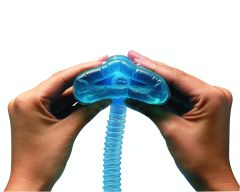 PEC001 - Introduction to CPAP, autoCPAP and BiPAP$36.00
This course introduces the new home medical equipment staff member to standard therapy for obstructive sleep apnea (OSA): CPAP (continuous positive airway pressure), auto-adjusting CPAP, and bilevel PAP (BiPAP). Because of the multitude of brands of PAP devices and accessories on the market, this course covers the devices in the broadest generic terms. For specific information related to a particular brand of CPAP, auto-adjusting CPAP, or BiPAP, please consult the device manufacturers.
Learn More -
 AGE009 - Aging and Sleep Disorders$42.00
This course reviews the effects, causes and treatment options of sleep disorders among the elderly population.
Learn More